Senegal’s public debt has become one of the great questions for our collective future. It does not concern only economists, bankers or officials at the Ministry of Finance. It directly affects the daily lives of Senegalese people, the funding of schools, the running of hospitals, youth employment, families’ purchasing power and our country’s capacity to invest in its development.
Senegal today stands at a turning point. Following the reassessment of its debt and the difficulties that followed the revelation of previously under-reported financial data, the authorities have embarked on a debt treatment process. A preliminary staff-level agreement with the International Monetary Fund covers financing of 2.2 billion dollars, while discussions are under way with creditors. According to information reported by Reuters, Senegal hopes to reach an agreement in principle with its official creditors and bondholders by December 2026. The IMF has been optimistic, while the US authorities have expressed the wish to see the process concluded in less than a year. These deadlines show the importance of the matter, but they do not yet guarantee its outcome.
The urgency is therefore real. But urgency must not lead us to confuse speed with haste, nor to consider that a financial agreement is necessarily a good agreement because it buys time.
The essential question is not only how Senegal will repay its debt. It is also at what economic and social cost it will be able to do so.
A country cannot durably restore its public finances by weakening the very people whose interests it is supposed to protect. Debt sustainability must be assessed on the basis of the country’s capacity to repay, but also its capacity to maintain essential services, support production and prepare for the future.
A debt can be financially restructured while remaining socially unsustainable if the efforts required result in a deterioration of public schools, more difficult access to healthcare, a decline in productive investment or additional pressure on the poorest households.
Fiscal recovery must therefore not become an accounting exercise disconnected from national reality.
In this respect, several notions that are often confused in public debate must be distinguished. Rescheduling maturities makes it possible to change the repayment timetable. A restructuring can go further and change the terms of the debt, according to the arrangements negotiated. New financing, however large, does not in itself constitute a definitive solution if the country remains unable to meet its future commitments without compromising its development.
Senegal must negotiate with seriousness, competence and firmness. It must take into account the legitimate interests of its creditors, but it cannot forget that its first responsibility is to its population. Creditors defend their investments; the Senegalese authorities must defend the general interest.
This requirement presupposes a transparent negotiation. Citizens have the right to understand the options being studied, the commitments being considered and the possible consequences of the various solutions. It is not a question of making public confidential information that could jeopardise the discussions. It is a question of ensuring that the confidentiality needed for negotiation does not become an absence of democratic accountability.
The authorities must in particular explain the objectives being pursued, any concessions, the risks taken on and the guarantees sought to safeguard the country’s interests. They must also specify the mechanisms that will prevent uncontrolled debt from building up again.
For the current crisis cannot be treated solely as a cash-flow difficulty. It raises a deeper question: that of the quality of public governance. The reliability of the accounts, the accuracy of financial information, parliamentary scrutiny, the transparency of commitments and the accountability of decision-makers are indispensable to restoring confidence.
Confidence cannot be decreed. It is built through verifiable facts, strong institutions and practices that make it harder to repeat the mistakes of the past.
But transparency will not be enough unless it is accompanied by a transformation of our economic model. Senegal cannot continue to seek financing to cover its needs without sufficiently strengthening the activities that create lasting wealth. It must broaden its productive base, support small and medium-sized enterprises, modernise agriculture, develop local processing, invest in vocational training and create decent jobs.
The exploitation of natural resources must also contribute more to national development, in keeping with the rules of transparency and sound management. The revenues drawn from these resources must not merely meet the budget’s immediate needs. They must prepare for the post-oil and post-gas era, strengthen useful infrastructure and improve the country’s productive capacities.
Mobilising public revenue is another major undertaking. It is legitimate to combat tax fraud, tax evasion and unjustified spending. It is also necessary to improve the efficiency of the administration and to better control public procurement. But this effort must be fair. It cannot rest mainly on modest households, small traders or businesses that already meet their obligations.
Tax justice requires that everyone contributes according to the rules and that the resources collected are used in a way that is efficient, auditable and useful to the community.
From this perspective, the budget must be seen as an instrument of social transformation, and not as a mere list of expenditure to be cut. Spending on education, health, training, social protection and productive investment must be examined in the light of its usefulness to the population and its contribution to development. The necessary savings must target first and foremost waste, ineffective spending and practices that weaken the quality of public action.
The consequences of budgetary choices for future generations must also be measured. A policy that balances the books temporarily, but deprives young people of training, job prospects and opportunities to start businesses, cannot be considered a complete success. Likewise, a country that cuts its essential investments to meet its financial deadlines risks weakening precisely the capacities that would enable it to repay tomorrow.
Fiscal discipline is necessary. Blind austerity cannot constitute a development policy.
The debate on debt must therefore go beyond partisan clashes and statements of convenience. It is a question neither of minimising the seriousness of the situation nor of indiscriminately attributing all responsibility to the current authorities. It is a question of establishing the facts, assigning responsibility on the basis of evidence and defining lasting solutions. The management of an inherited debt binds the present authorities, just as the decisions taken today will bind the governments and generations of tomorrow.
To this end, progress in the negotiations must be reported regularly, relevant budgetary information published, oversight of public commitments strengthened, and representative institutions and social forces involved in reflection on the major choices. Citizens must be able to follow how resources are used and check whether the sacrifices demanded are producing results.
Ultimately, true economic sovereignty does not consist in refusing all negotiation with financial partners. It consists in being able to negotiate without losing control of one’s national priorities. It requires a credible administration, transparent public finances, a productive economy and institutions capable of protecting the general interest.
Senegal must therefore secure an agreement that gradually restores the sustainability of its debt, limits financial risks and preserves the means indispensable to its development. Success will not be measured solely by the signing of a document or the release of funding. It will also be measured by the country’s capacity to honour its commitments without abandoning its social priorities, to invest without accumulating new vulnerabilities and to account for its choices to citizens.
Negotiating today is a necessity. Preserving the future is an obligation.
Debt must not become a chain that immobilises Senegal, but a problem to be solved so that it can return to the path of development. Financial recovery only makes sense if it opens up prospects for the population. True success will be the one that restores partners’ confidence while strengthening Senegalese people’s confidence in their institutions and their future.
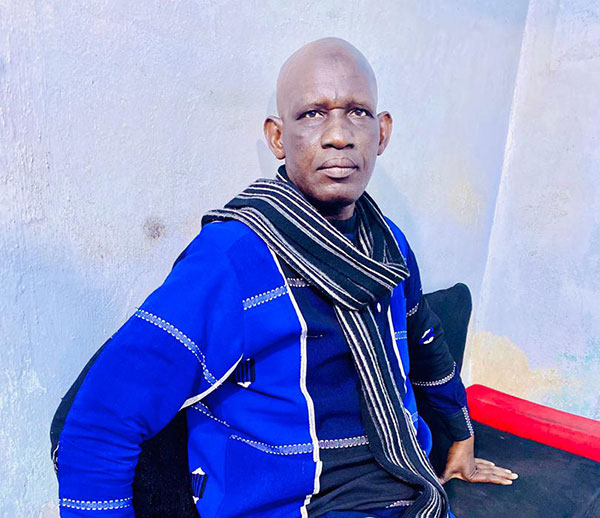
Amadou MBENGUE, known as Vieux
Secretary General of the Departmental Coordination of Rufisque
Member of the Central Committee and the Political Bureau of the Pit/Senegal
Comments (0)
Be the first to comment.
Sign in to comment